The Writing of Logan Taylor Brown
Am I Really Blogging Now?
And... I'm back to listening to Yellow by Coldplay.My period cramps are trying to take me out. My room's a disaster. I don't believe I've slept beside a pile of clean clothes since I was a teenager, and something about it affords me a nostalgia I don't immediately intend to rectify. Beating myself with a feather here.
I came home from my friend's apartment soaking wet from the storm that is a Sunday evening these days. As I headed to the lamp to avoid overhead lighting, my headphone wire caught on the coffee pot stand, sending a nearly full pot of cold coffee and glass to the floor.
Oh my, my, my, my.
Could I explode now?
Naturally, after getting down on my hands and knees to sop up the mess with old T-shirts (of course we're out of paper towels!), I went for a glass of water. The faucet, not to be outdone, produced only scalding water.
Ah, your late twenties. Cosmically divine, these precious years. How heartbreaking the reign of liberation.
One minute you're running across an avenue, physically running, listening to music at a volume that will undoubtedly result in permanent hearing damage, rain coming down so hard you can scarcely distinguish yourself from the plummeting drops of water. For a moment, the distinction between yourself and the world feels unnecessary. The next, you're quite certain God's sense of humor really isn’t all that hysterical.
And I, for one, have been doing my part to keep the comedy going. I've gone and put some distance between myself and another perfectly innocent object of my affection, afraid that the heart, left to its own devices, might lead me somewhere I've worked rather hard to leave behind. Praying, consciously praying, that some part of my vulnerability might pass for dignity, and that the restraint itself might be understood as an act of love, rather than its absence. Riiiight?
Being in your twenties is not for the faint of heart. Only after the millionth crash and burn do you begin to suspect that the whole thing might be less a period of self-discovery than an endurance test.
And while icing the burn, you hear some woman outside your apartment yelling into the night sky, "Why, why, why?"
Shit, lady, I was just thinking the same thing.
If you ask me, it's a poignant question. Maybe the most tiring one.
Your twenties are embarrassing, to say the least. There's the humiliation of knowing better and behaving otherwise, of mistaking appetite for conviction, attention for affection, and every temporary condition for a permanent state of affairs. Yet these are the very years I spent my adolescence longing to play in.
The years I can legitimately hop out of bed and dance to a song I once had to wait patiently to hear on the radio. The years I can break my own heart and attempt to repair it with newfound wisdom, acquired by discussing the matter into the ground with my free therapist, my best friend, over hot chocolates that cost us both five hours' worth of wages.
The years I can eat whatever I please, while gradually acquiring the discernment to recognize which things actually make me feel good afterward. Gosh, I had a sugar comedown the other night so reminiscent of childhood that I nearly pretended to be asleep when we arrived at my apartment, hoping someone might carry me out of the Uber and up to bed.
There is something peculiar about having absolute authority over the smallest decisions of your life and so little command over the larger ones.
These are also the years in which it becomes terribly important to sit on the floor of your bedroom in new motorcycle racing boots and your pajamas, listening to the same two songs repeatedly, determined to extract every last sensation from each line and note.
Then you've got to drink four cups of coffee. Bonus points if you trip on your way to making it in your new racing boots. You don't fall, mind you. Just a little trip. An interruption sufficient to direct your attention downward, where you discover that your pajamas are two different shades of purple.
A small triumph of observation!
Eventually, you retire from the floor after deciding the Moroccan rug really needs a good cleaning. And just like that, all your self-pity and disappointment have been alchemized into productive energy. Enough time has passed that you can send a text to your friend outlining the really important and multifaceted stages of upkeep required on the journey to being THE BEST.
It's a tremendous amount of work, being a person. Being a kinda-still-young person. Or, being a person.
I think these are the years when our references are only just beginning to stand on their own two feet. All the things we've read, witnessed, endured, admired, mistaken, and believed are attempting to organize themselves into something resembling a philosophy. Holding on for dear life, they take one wobbly step after another, developing, ever so slowly, a firmer and surer walk.
I've lived a great deal already. Enough to know that experience and understanding do not always arrive together. Enough to recognize that wisdom is not necessarily the reward for suffering, but something one must make of it afterward. And enough, apparently, to retain the extraordinary nerve to believe I'm only just beginning.
How wild to have spent so much of one's life longing to be a grown woman, only to discover that being one involves an awful lot of sitting on the floor, wondering if it's all gone wrong, or scarier still, right?
I have no idea what my thirties will be like. But if we go off what I've wished for, I hope it'll be buckets of money raining down on me, accompanied by a flirty, thriving, insatiable lust for life.
You know, really grounded stuff.

Logan Taylor Brown’s “Yaan’s East 4th Apt”
On Love
“We’re neither pure, nor wise, nor good; we do the best we know.”— Voltaire
The most vile, the simplest, and the catatonic are among those who have been clutched, at one point or another, by the soft hands of love. This is so -- no human who has passed through a lifetime can escape an encounter with the immeasurable dance that is love. One cannot move through life without being grazed by it, no matter how strange, brief, or distant. If the span of life were but a single moment, then mixed within the chorion and villi of the placenta would be the first act of Love: the consumption of nourishment. We are not to escape the radiance of this ethereal concept, for if we could, the paradox that is a human being would cease to exist. Even if one tried to run from love, they would only trip over the contradiction of their own existence -- a beast caught between love and the loss of it, between what we crave and what we are afraid to hold.
The dual nature of being human is not born of good or bad, I believe, but from the ideal of love and its absence. The gambler who loses everything, the alcoholic who laments only pain and sorrow, the spurned man-child who deals in cowardice -- all can recall the fabric of care once draped upon them. The widow, the mute, and the blind, if asked, can each procure an example. Even those imprisoned for wicked actions, though they have contorted and manipulated the concept of love, are not exempt from the experience of a time remedied by a guest of higher calling.
Love is not what the human makes it out to be. There is the idea of it — this we can try on in our minds and hearts. But like water, love is neither ours to define nor to design; rather, it designs us. It grows legs to run with. It hides in the charcoal of an artist’s instrument, in the trembling note of a song that pulls one apart. It is the cliff one overlooks, and it is the trust that lends itself to the fallen’s landing. Heartbreak is as painful as it is because love is abandoned. Sometimes, it seems a great distance must be traveled with love left behind. Sometimes, the work is to understand that all of it is internal -- that love is the bridge permitting mirrors to face each other. And yet, profundity is never beyond the grasp of intention. What will free one, suspend one, bind one, and transfix one will remain hidden in plain sight.
Love and perception are the best of friends. It is learning to see that is hard. A slew of other pillars are uncovered in the process of bringing order to one’s experience: respect, dignity, and integrity come out to play. In the field of one’s mind, the frolicking of being human blends a little of each, creating the whispering notion that life is worth living -- worth uncovering, exploring, deciding, and letting go. There is love within commitment and spontaneity, within the mundane and even the profane.
“La raison d’aimer, c’est l’amour.”
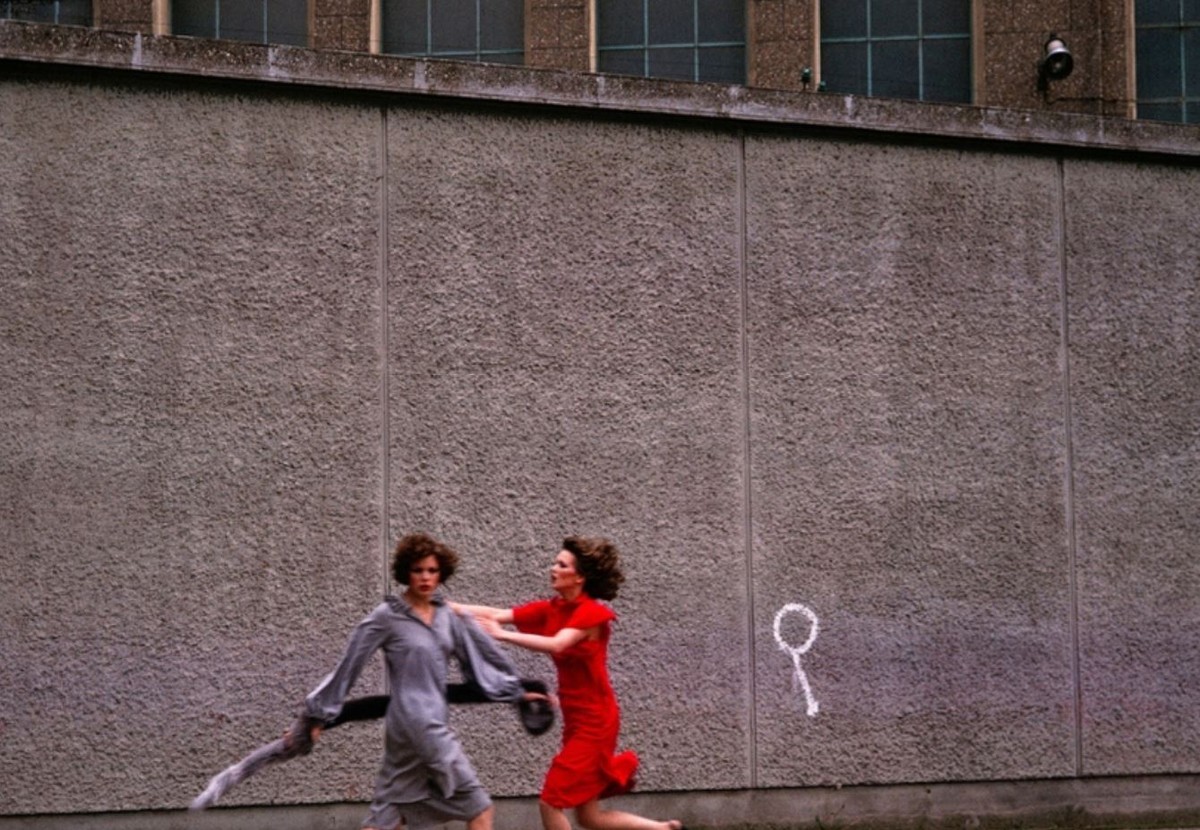
Guy Bourdin’s “Red Dress”
On Fear
“A man who fears suffering is already suffering from what he fears.”
— Montaigne
They tell you as a child: face your fear. Head-on. No shield, no armor. Bare as you can be — the only weapon you carry is yourself. Fear can be starved, but it can't be ignored.
When you come down from the tornado winds of panic — ripped up, scattered, in pieces — you'd do well to realize there was never anything to fear. Fear is yours to command. It's when one forgets this that the beast of cemented ideology seems to loom, casting a shadow one foolishly believes spans unseeable distances.
But you persevere. You make up reasons to lean into other feelings — pull from joy, anger, hope, and understanding. And when you're naked, raw, alone, you call out to trust, to choice, to belief that won't deplete. With some rope — imagined or real — you tie those anchors to your soul and keep moving. One foot, then the other. You follow what every human carries, somewhere deep inside: intuition.
And when you eventually reach the end of the shadow, in that pixelated space where light and darkness meet, don't be surprised if a great portion of you bemoans perplexed emotion over leaving the shade. What was scary has become familiar, and your bare self rings the last bells of trepidation over the idea of leaving a makeshift shelter in fear.
Until you step into the day that rains light over you — you whose strength was but a pinpoint, you who grew strong in all you overcame, perhaps at first, when the dazzling calm of a storm passing runs the length of you, you shudder in its warmth. In time, now clothed and shielded in safety, in the quiet calm, you realize: fear doesn't vanish. It slips into the back of your mind like a worry stone in your pocket, a thing you can rub without even thinking. And somewhere, deep inside, you cradle the version of yourself that used to be ruled by fear.
You carry that part with you — not as a weight, but as a reminder. Because without it, you would never have tasted what it means to live without obstacles. You'd never know the freedom of the fields you now run through with wild abandon.
“Fear is only as deep as the mind allows.”
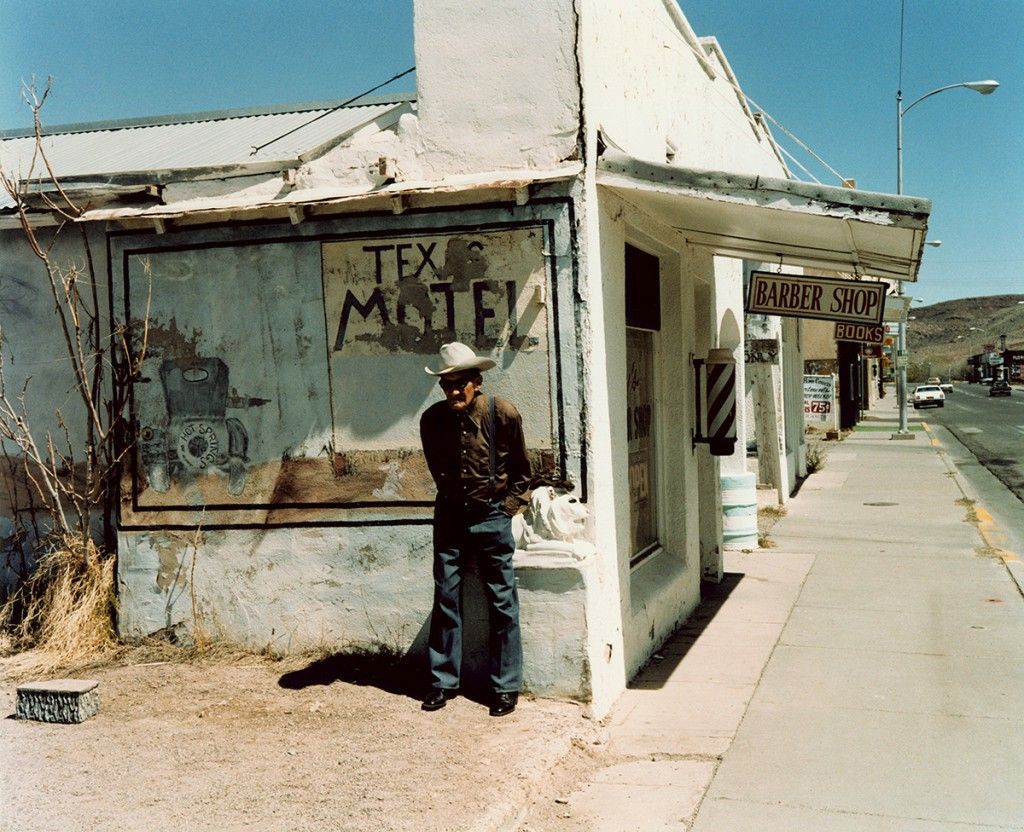
Wim Wenders’ “Written in the West”
Excerpt from the short story “Royce and Mara”
Royce’s Daddy
Royce and his predecessors had long since lost the Americans’ interest in farmed land and produce. In time, they stopped the payments on the newest version of the mortgage. The great American dream — to be in debt — had sought, found, and conquered Royce and the family who’d raised him.
See, Royce’s daddy didn’t take life lying down. Only death, an eternal sleep, suited his fancy. When the first talks came about losing the acres to the sparkling new government building — the one that sat up on Brown Street like a proud kid with a loud, swollen insolence — well, John Fisher wouldn’t hear a thing of it. Proud and towering, as though the milk in his bones worked overtime, he fought those conversations. Then he fought the notion it was really going to happen.
Then he fought the notarizer, the signature, the final submission to reality came, thick and ugly.
And when he came home that night, after the deeds were transferred and succumbed to bureaucratic filing, John Fisher had not an ounce of fight left in him. He ate the dinner Mrs. Fisher cooked up, swathed the hair of his four children, and tucked them into bed. Sandy — Mrs. Fisher — knew something other than the usual bad was working in him, but her mind told her it wasn’t her place to ask. A man did what a man pleased, and if he wanted to show emotion or say a soft I-love-you to the children on a hard day, who was she to interfere?
Later that night, when John slipped out of the warm bed — careful as he quietly unfastened himself from the quilt’s embrace — and when he slipped down the attic steps, out the back door, and into the adjacent barn, nobody in the house knew a thing. They kept on sleeping. The two boys in their shared bed, the two girls in theirs, Sandy rolling over, dreaming of a hot day where she’d be bound to stay perched on the veranda. All peaceful tidings in a house that had just lost all right to peace.
It was John Fisher — Royce’s daddy, proud and towering — who sacrificed his pride, shrank from his height, and slipped a roughly thrown-together noose over his stern neck — the great American dream.
Royce found him dangling in the early hours of the morning.
The cows looked up with tired eyes when the boy screamed.
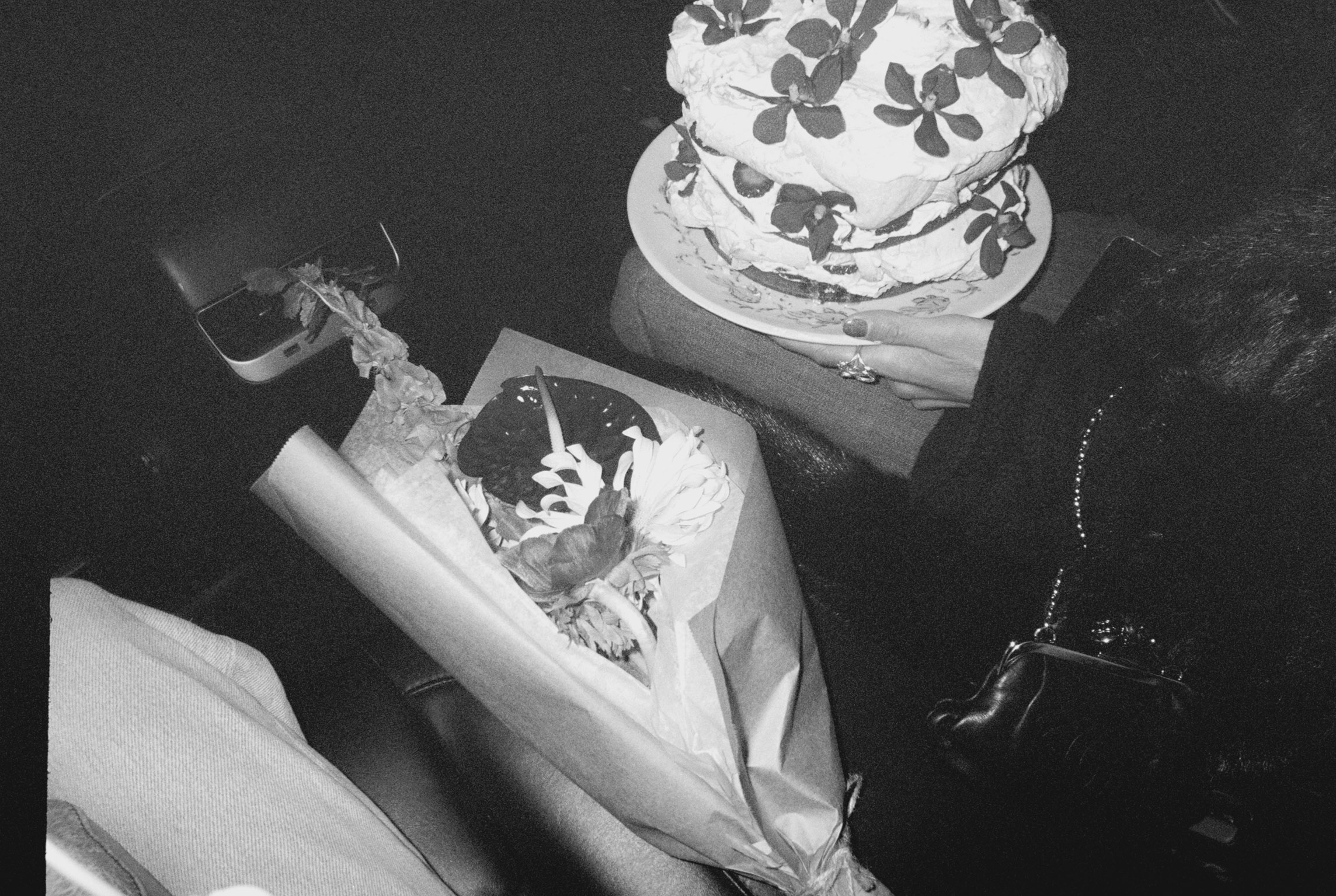
Logan Taylor Brown’s “Iza’s Offerings”
Excerpt from the novella “Anywhere I”
Railroad Apartment
“So, this is where your room is.” I went to open the door of the room right off the landing.
“No, no. I mean—you can open it,” she said. I did. “But that’s just a spare room we don’t really have any use for right now.” She walked away from the stairs and me. I followed her, not realizing she meant my room was down here in the basement, a few paces from the staircase. “This is your bathroom.” The light switch flipped up to reveal a yellow-tinted half bath. And then, “Sorry for the mess, I’ve been meaning to get down here.” She moved apple crates filled with art supplies and loose clothing out of our way, opening the final door.
The room was of decent size, a rather big square. In the far-right corner were box springs, void of a mattress. The ceilings were low.
“Must be the luggage portion of the railroad apartment,” I said.
Adair let out a solo “ha” in response. On the wall hung a skinny mirror.
“I had to throw out the mattress—bed bugs nearly munched it away.” I came to find out Adair would say shocking things in extremely jovial tones. “But that was months ago. An exterminator’s been here and all that.”
“Aw, cheese, I heard about those. Damn, bugs scare the shit out of me.”
“Don’t even worry about it, you’re all good, I promise. I have a few quilts, and you could use one of my pillows, or we can take some from the couch upstairs in the meantime?” She went back into the hall, returning with her arms filled with two hefty quilts and dumping them on the bed. “I’ll see what I can do about getting a mattress down here.” She seemed genuinely embarrassed for not having thought of it before I arrived.
I’d never slept on box springs; I remained unconcerned. A girl with somewhat regular standards probably would have had some qualms with ending her day on rusted metal—thankfully for Adair, she wasn’t around.
“I’ve got a knack for passing out anywhere. I’ll be fine.”
She looked at me sideways and shrugged. “I’ll still keep an eye out.” Checking the watch on her left wrist, she said, “shit, I’ve gotta get going. Um, is there anything else?” After giving me a few food and bar recommendations in the neighborhood, she handed me a set of keys. “Lorenzo should be home soon-ish. If you need anything, you have my number, or you can ask him—he won’t bite.”
With that, she was off. I heard the front door slam shut as I role-played a mother bird, setting up my nest.
My luggage was a set of vintage cream-colored vinyl suitcases. I clicked the locks together, and the box sprang open. There was no table or desk to put anything on, so I placed things against the wall next to the springs. An incense holder with its accompanying frankincense. After two minutes of that burning, I realized there was no ventilation in my underground bunker. The smoke danced above my head.
Next to come out of the suitcase were a couple of books that went with me everywhere—Another Country, by Baldwin; East of Eden, by Steinbeck. Neither of them rare finds, but my loyal travel companions. A picture of my mother and me, a CD player and headphones, and this small silver trinket of two women embraced in a frozen waltz. The room was all put together.
When the lights were out, the basement ceased to be a room and became a condition, one I would learn to inhabit.
© 2026 Logan Brown. All rights reserved.